









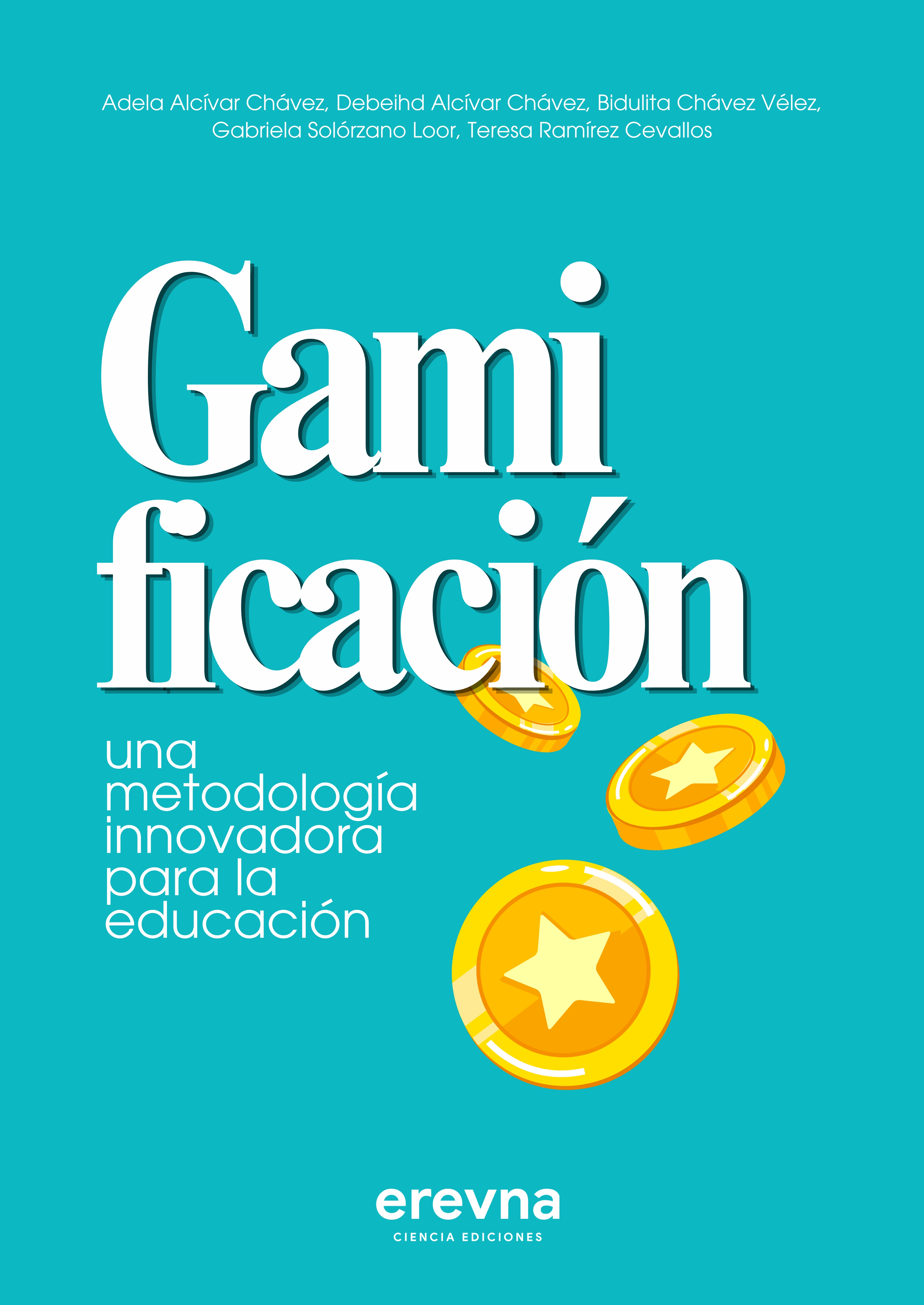
La educación atraviesa un proceso de transformación asociado con los avances tecnológicos, las nuevas formas de interacción y la necesidad de renovar las prácticas de enseñanza. En este escenario, ha aumentado el interés por metodologías que promuevan la participación, la motivación y el compromiso de los estudiantes con su formación. Entre estas propuestas, la gamificación ha adquirido relevancia al incorporar elementos del diseño de juegos en contextos educativos, mediante dinámicas que integran desafíos, progresión, retroalimentación y reconocimiento de los logros.
La presente obra, titulada Gamificación: una metodología innovadora para la educación, ofrece una aproximación académica y pedagógica a esta metodología, a partir del análisis de sus fundamentos conceptuales, sus posibilidades de aplicación y las condiciones que intervienen en su implementación. Su contenido busca superar las interpretaciones que reducen la gamificación al empleo de puntos, recompensas o herramientas digitales, para examinar sus implicaciones en la planificación y el desarrollo de propuestas didácticas.
Alcívar-Chávez, A. C., Ordóñez-Calle, J. P., Patiño-Campoverde, M. M., Barandica-Macías, A. E., & Moya-Lara, I. N. (2025). DESARROLLO EMOCIONAL EN LA PRIMERA INFANCIA: DE LA TEORÌA A LA PRÀCTICA. Editorial Erevna Ciencia Ediciones. https://doi.org/10.70171/hce0r182
Allen, L., Kelly, B. B., & National Research Council. (2015). Child development and early learning. In Transforming the workforce for children birth through age 8: A unifying foundation. National Academies Press (US). https://www.ncbi.nlm.nih.gov/books/NBK310550/
Alsawaier, R. S. (2018). The effect of gamification on motivation and engagement. The International Journal of Information and Learning Technology, 35(1), 56-79. https://doi.org/10.1108/IJILT-02-2017-0009
Bandura, A. (1982). Teoría social del aprendizaje.
Blohm, I., & Leimeister, J. M. (2013). Gamification: Design of IT-based enhancing services for motivational support and behavioral change. Business & information systems engineering, 5(4), 275-278. https://doi.org/10.1007/s12599-013-0273-5
Bogost, I. (2013). Exploitationware. In Rhetoric/composition/play through video games: Reshaping theory and practice of writing (pp. 139-147). New York: Palgrave Macmillan US. https://doi.org/10.1057/9781137307675
Caillois, Roger. Man, play, and games. University of Illinois press, 2001.
Cannon-Brown, W. (2007). Nefer: The aesthetic ideal in classical Egypt. Routledge.
Chou, Y. K. (2019). Actionable gamification: Beyond points, badges, and leaderboards. Packt Publishing Ltd.
Christopoulos, A., & Mystakidis, S. (2023). Gamification in Education. Encyclopedia 2023, 3, 1223–1243. https://doi.org/10.3390/encyclopedia3040089
Chung, C. H., Shen, C., & Qiu, Y. Z. (2019). Students' acceptance of gamification in higher education. International Journal of Game-Based Learning (IJGBL), 9(2), 1-19. 10.4018/IJGBL.2019040101
Corona Martínez, D., & Real García, J. J. (2019, March). Using Malone’s theoretical model on gamification for designing educational rubrics. In Informatics (Vol. 6, No. 1, p. 9). MDPI. https://doi.org/10.3390/informatics6010009
Csikszentmihalyi, M., Abuhamdeh, S., & Nakamura, J. (2014). Flow. In Flow and the foundations of positive psychology: The collected works of Mihaly Csikszentmihalyi (pp. 227-238). Dordrecht: Springer Netherlands.
Dah, J., Hussin, N., Zaini, M. K., Isaac Helda, L., Senanu Ametefe, D., & Adozuka Aliu, A. (2025). Gamification is not working: Why?. Games and Culture, 20(7), 934-957. https://doi.org/10.3390/COMPUTERS12070143
Dai, W. A., Xu, W., & Xing, Q. W. (2025). Gamified learning impact: A meta-analysis of game element combinations on students’ learning outcomes. Educational technology research and development, 73(4), 2617-2643. https://doi.org/10.1007/s11423-025-10493-y
Damjanovic, V., & Branson, S. (2025). Empowering diverse learners: Integrating tangible technologies and low-tech tools to foster STEM engagement and creativity in early childhood education. Education Sciences, 15(8), 1024. https://doi.org/10.3390/educsci15081024
Deci, E. L., & Ryan, R. M. (2012). Self-determination theory. Handbook of theories of social psychology, 1(20), 416-436.
Deterding, S., Sicart, M., Nacke, L., O'hara, K., & Dixon, D. (2011). Gamification. using game-design elements in non-gaming contexts. In CHI'11 extended abstracts on human factors in computing systems (pp. 2425-2428). https://doi.org/10.1145/1979742.1979575
Dimand, M. A., & Dimand, R. W. (1996). The history of game theory, volume 1: from the beginnings to 1945. Routledge.
Dreimane, S. (2021). Gamification before its definition–An overview of its historical development. INTED2021 Proceedings, 7187-7193. https://doi.org/10.21125/inted.2021.1434
Eccles, J. S., & Wigfield, A. (2002). Motivational beliefs, values, and goals. Annual review of psychology, 53(1), 109-132. https://doi.org/10.1146/annurev.psych.53.100901.135153
Elnahla, N., & Neilson, L. (2026). Getting something for nothing: the history of trading stamps in the United States of America (1891–2008). Journal of Historical Research in Marketing, 18(2), 195-223. https://doi.org/10.1108/JHRM-07-2025-0039
Everett, N. (2009). Literacy from Late Antiquity to the Early Middle Ages, c. 300–800 AD. The Cambridge Handbook of Literacy, 362-85.
Froebel, F. (1899). Pedagogics of the Kindergarten.
Furkan Kurnaz, M., & Koçtürk, N. (2025). A Meta‐Analysis of Gamification's Impact on Student Motivation in K‐12 Education. Psychology in the Schools, 62(12), 4997-5009. https://doi.org/10.1002/pits.70056
Galle, L., & Roth, S. (2026). When gamification overwhelms: Information load and reuse intention in online retail. Journal of Retailing and Consumer Services, 93, 104889. https://doi.org/10.1016/j.jretconser.2026.104889
Gamayanto, I., Haryanto, H., & Harisa, A. B. (2021, November). Design of the Seven Stages of Educational Game to Generate Gamification. In 2021 1st Conference on Online Teaching for Mobile Education (OT4ME) (pp. 98-102). IEEE. https://doi.org/10.1109/OT4ME53559.2021.9638793
Gejandran, P., & Abdullah, N. (2025). Developing a model to explain teacher effectiveness: the mediating role of gamification. Cogent Education, 12(1), 2521154. https://doi.org/10.1080/2331186X.2025.2521154
Gyedu, F. O., Partey, P. A., Boafo, F. A., & Agbo, D. D. (2026). Gamification effect: Enhancing student learning outcomes in higher education: A meta-analysis and policy implications. Sage Open, 16(1), 21582440261421375. https://doi.org/10.1177/21582440261421375
Hakak, S., Noor, N. F. M., Ayub, M. N., Affal, H., Hussin, N., & Imran, M. (2019). Cloud-assisted gamification for education and learning–Recent advances and challenges. Computers & Electrical Engineering, 74, 22-34. https://doi.org/10.1016/j.compeleceng.2019.01.002
Hamari, J. (2017). Do badges increase user activity? A field experiment on the effects of gamification. Computers in human behavior, 71, 469-478. https://doi.org/10.1016/j.chb.2015.03.036
Hattie, J., & Timperley, H. (2007). The power of feedback. Review of educational research, 77(1), 81-112. https://doi.org/10.3102/003465430298487
Hitchcock, R. K. (2019). Hunters and gatherers past and present: Perspectives on diversity, teaching, and information transmission. Reviews in Anthropology, 48(1), 5-37. https://doi.org/10.1080/00938157.2019.1578025
Huang, W. H. Y., & Soman, D. (2013). Gamification of education. Report Series: Behavioural Economics in Action, 29(4), 37.
Hunicke, R., LeBlanc, M., & Zubek, R. (2004, July). MDA: A formal approach to game design and game research. In Proceedings of the AAAI Workshop on Challenges in Game AI (Vol. 4, No. 1, p. 1722).
Huotari, K., & Hamari, J. (2017). A definition for gamification: anchoring gamification in the service marketing literature: Huotari K., Hamari J. Electronic markets, 27(1), 21-31. https://doi.org/10.1007/s12525-015-0212-z
Kalantzis, V. (2017). Gamification and customer loyalty. XRDS: Crossroads, The ACM Magazine for Students, 24(1), 63-63. https://dx.doi.org/10.1145/3123762
Kapp, K. M. (2012). The gamification of learning and instruction: game-based methods and strategies for training and education. John Wiley & Sons.
Khan, A., Ahmad, F. H., & Malik, M. M. (2017). Use of digital game based learning and gamification in secondary school science: The effect on student engagement, learning and gender difference. Education and information technologies, 22(6), 2767-2804. https://doi.org/10.1007/s10639-017-9622-1
Kolb, D. A. (1984). Experiential learning: Experience as the source of learning and development (Vol. 1, No. 1, pp. 270-289). Englewood Cliffs, NJ: Prentice-hall.
Landers, R. N., Auer, E. M., Collmus, A. B., & Armstrong, M. B. (2018). Gamification science, its history and future: Definitions and a research agenda. Simulation & Gaming, 49(3), 315-337.
Larrosa, M., Wives, L., & Rodés, V. (2023, October). Gamification strategies as formative assessment methods. A systematic review. In Latin American Conference on Learning Technologies (pp. 145-156). Singapore: Springer Nature Singapore. https://doi.org/10.1007/978-981-99-7353-8_12
Li, M., Ma, S., & Shi, Y. (2023). Examining the effectiveness of gamification as a tool promoting teaching and learning in educational settings: A meta-analysis. Frontiers in psychology, 14, 1253549. https://doi.org/10.3389/fpsyg.2023.1253549
Locke, E. A., & Latham, G. P. (2013). Goal setting theory, 1990. In New developments in goal setting and task performance (pp. 3-15). Routledge.
Locke, J. (1693). Some thoughts concerning education. A. and J. Churchill.
Lucas, F. M. M. (2017). The game as an early childhood learning resource for intercultural education. Procedia-social and behavioral sciences, 237, 908-913. https://doi.org/10.1016/j.sbspro.2017.02.127
Mark, M. (2007). 18 The Beginnings of Chess. In Ancient Board Games in Perspective: Papers from the 1990 British Museum Colloquium, with Additional Contributions (p. 138). British Museum Press.
Martin, S. M., Casey, J. R., & Kane, S. (2021). Ludology and the origins of games and learning. In Serious games in personalized learning (pp. 48-71). Routledge.
McMillen, J. (1996). Understanding gambling: History, concepts and theories. Gambling cultures: Studies in history and interpretation, 6-42.
Mochocki, M. (2011). Reality is broken: Why games make us better and how they can change the world. jane mcgonigal. 2011. new york: Penguin press, ss. 388. Czasopismo ludologiczne Polskiego Towarzystwa Badania Gier, 239.
Mora, A., Riera, D., Gonzalez, C., & Arnedo-Moreno, J. (2015, September). A literature review of gamification design frameworks. In 2015 7th international conference on games and virtual worlds for serious applications (VS-Games) (pp. 1-8). IEEE. https://doi.org/10.1109/VS-GAMES.2015.7295760
Mora, A., Riera, D., González, C., & Arnedo-Moreno, J. (2017). Gamification: a systematic review of design frameworks. Journal of Computing in Higher Education, 29(3), 516-548. https://doi.org/10.1007/s12528-017-9150-4
Nadi-Ravandi, S., & Batooli, Z. (2022). Gamification in education: A scientometric, content and co-occurrence analysis of systematic review and meta-analysis articles. Education and Information Technologies, 27(7), 10207-10238. https://doi.org/10.1007/s10639-022-11048-x
Nadolny, L., Alaswad, Z., Culver, D., & Wang, W. (2017). Designing with game-based learning: Game mechanics from middle school to higher education. Simulation & Gaming, 48(6), 814-831. https://doi.org/10.1177/1046878117736893
Nolan, J., & McBride, M. (2014). Beyond gamification: reconceptualizing game-based learning in early childhood environments. Information, Communication & Society, 17(5), 594-608. https://doi.org/10.1080/1369118X.2013.808365
Pandey, A. (2017). A brief history of gamification. XRDS: Crossroads, The ACM Magazine for Students, 24(1), 13-13.
Piaget, J. (1981). La teoría de Piaget. Infancia y aprendizaje, 4(sup2), 13-54. https://doi.org/10.1080/02103702.1981.10821902
Ren, J., Xu, W., & Liu, Z. (2024). The impact of educational games on learning outcomes: Evidence from a meta-analysis. International Journal of Game-Based Learning (IJGBL), 14(1), 1-25. 10.4018/IJGBL.336478
Renau Cano, M., Espelt, R., & Fuster Morell, M. (2023). Working conditions in platform work: testing digital platform workers’ rights on platform cooperatives. Open Research Europe, 3, 162. https://doi.org/10.12688/openreseurope.16218.1
Ricoy, M. C., Sánchez-Martínez, C., Sáez-López, J. M., & Quicios García, M. D. P. (2026). Gamification in primary education. Technology, Pedagogy and Education, 35(4), 725-745. https://doi.org/10.1080/1475939X.2025.2562354
Sailer, M., & Homner, L. (2020). The gamification of learning: A meta-analysis. Educational psychology review, 32(1), 77-112. https://doi.org/10.1007/s10648-019-09498-w
Sambo, K. U., Shishah, W., & Isiaku, L. (2025). Barriers to gamification adoption in education: A systematic review of cultural, technological, and institutional challenges in developing countries. Information Development, 02666669251331268. https://doi.org/10.1177/02666669251331268
Sabornido, E. B., Garma, V. A., Niepes, G. L., & Cabria, F. M. N. (2022). Key challenges and barriers in gamification: a systematic review. Asia Pacific Journal of Advanced Education and Technology, 1(1), 13-19.
Skinner, B. F. (1971). Operant conditioning. The encyclopedia of education, 7, 29-33.
Sun, X., & Sailer, M. (2025). Students' behavioural, cognitive and affective outcomes in gamified flipped classrooms: A meta‐analysis. Review of Education, 13(1), e70039. https://doi.org/10.1002/rev3.70039
Sweller, J., & Chandler, P. (1991). Evidence for cognitive load theory. Cognition and instruction, 8(4), 351-362. https://doi.org/10.1207/s1532690xci0804_5
Van Binsbergen, W. (1996). Time, space and history in African divination and board-games. Time and temporality in intercultural perspective: studies presented to Heinz Kimmerle, 105-25.
Van Roy, R., & Zaman, B. (2018). Need-supporting gamification in education: An assessment of motivational effects over time. Computers & Education, 127, 283-297. https://doi.org/10.1016/j.compedu.2018.08.018
Velez, J. A., Ewoldsen, D. R., Hanus, M. D., Song, H., & Villarreal, J. A. (2018). Social comparisons and need fulfillment: interpreting video game enjoyment in the context of leaderboards. Communication Research Reports, 35(5), 424-433. https://doi.org/10.1080/08824096.2018.1525352
Vidaković, M., Lara, M., Duchi, L., Whitcomb, A., & Paas, F. (2023, September). Two-part onboarding for game-based learning environments. In Frontiers in Education (Vol. 8, p. 980881). Frontiers Media SA. https://doi.org/10.3389/feduc.2023.980881
Vygotsky, L. S. (1978). Mind in society: The development of higher psychological processes (M. Cole, V. John-Steiner, S. Scribner, & E. Souberman, Eds.). Harvard University Press.
Werbach, K., & Hunter, D. (2015). The gamification toolkit: dynamics, mechanics, and components for the win. University of Pennsylvania Press.
Wiggins, B. E. (2016). An overview and study on the use of games, simulations, and gamification in higher education. International Journal of Game-Based Learning (IJGBL), 6(1), 18-29.
Zainuddin, Z., Rasyidin, R., Zanzibar, Z., Aruni, F., & Nurmasyahyati, N. (2023). Andragogical principles in a gamification concept: how does it work for adult learners in an online class? Journal of Applied Research in Higher Education, 15(5), 1632-1648. https://doi.org/10.1108/JARHE-04-2022-0127
Zhang, Q., & Yu, Z. (2022). Meta‐analysis on investigating and comparing the effects on learning achievement and motivation for gamification and game‐based learning. Education Research International, 2022(1), 1519880. https://doi.org/10.1155/2022/1519880

Acceso abierto y distribuido según los términos y condiciones de la licencia Creative Commons Atribución-NoComercial-CompartirIgual 4.0 Internacional (CC BY-NC-SA 4.0).